How Much Does a Small Business Website Cost in the UK?
The honest answer: anywhere from £6 a month to £10,000 upfront — and the difference isn't always quality. Here's what you're actually paying for, so you can choose with your eyes open.
If you've asked three web designers for a quote, you've probably had three wildly different numbers back. That's not because anyone is trying to fleece you (usually). It's because "a website" can mean very different things. Let's break down the four ways UK small businesses typically get online, and what each one genuinely costs — not just on day one, but over the years you'll actually own it.
Option 1: DIY website builders (£10–£40 per month)
Platforms like Wix, Squarespace and GoDaddy let you build a site yourself for a modest monthly fee. On paper, it's the cheapest route. In practice, the real cost is your time. Most business owners we speak to spent two or three weekends wrestling with templates, then another few evenings trying to work out why the site doesn't show up on Google — and the writing, the photos and the upkeep are still all on you.
If you enjoy that sort of thing and your evenings are free, it's a perfectly reasonable choice. If you'd rather be running your business, the £10 a month starts to look less like a bargain.
Option 2: A freelancer (£500–£2,500 upfront)
A good freelance designer will build you something far more polished than a DIY effort, typically for £500–£2,500 depending on size and complexity. The catch comes later: hosting, domain renewal, security updates, and the inevitable "small change" that takes three emails and a fortnight to arrange. Freelancers also move on, change careers and put their prices up — and suddenly nobody knows the login to your own website.
Option 3: An agency (£3,000–£10,000+ upfront)
Agencies deliver excellent work with proper project management, and for larger businesses they're often the right call. But for a five-page site for a plumber, a salon or a small consultancy, £5,000 upfront plus £50–£100 a month in maintenance is a lot of money for something that will need redesigning again in three or four years anyway.
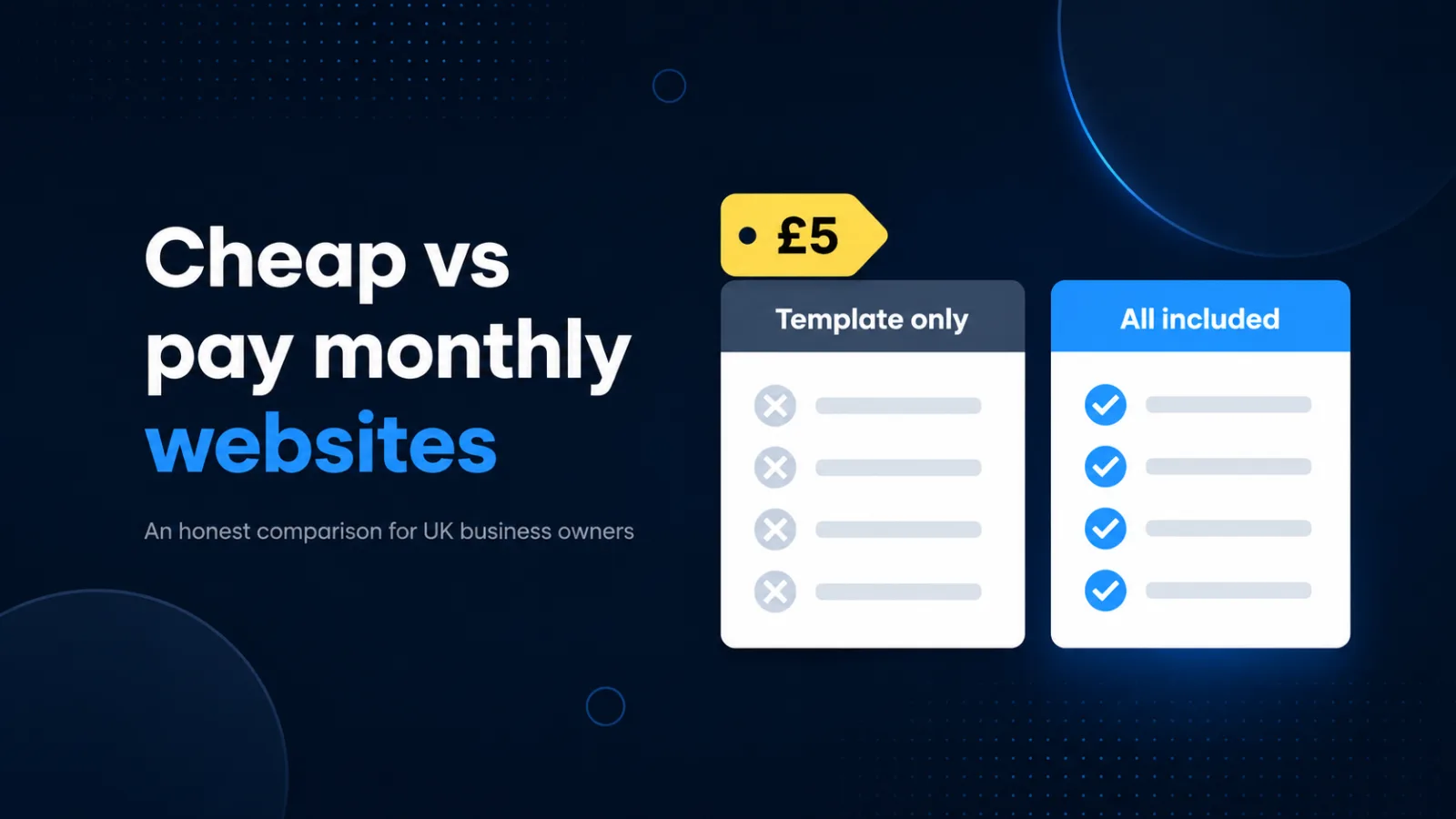
Option 4: Renting a website (£30–£150 per month, no upfront cost)
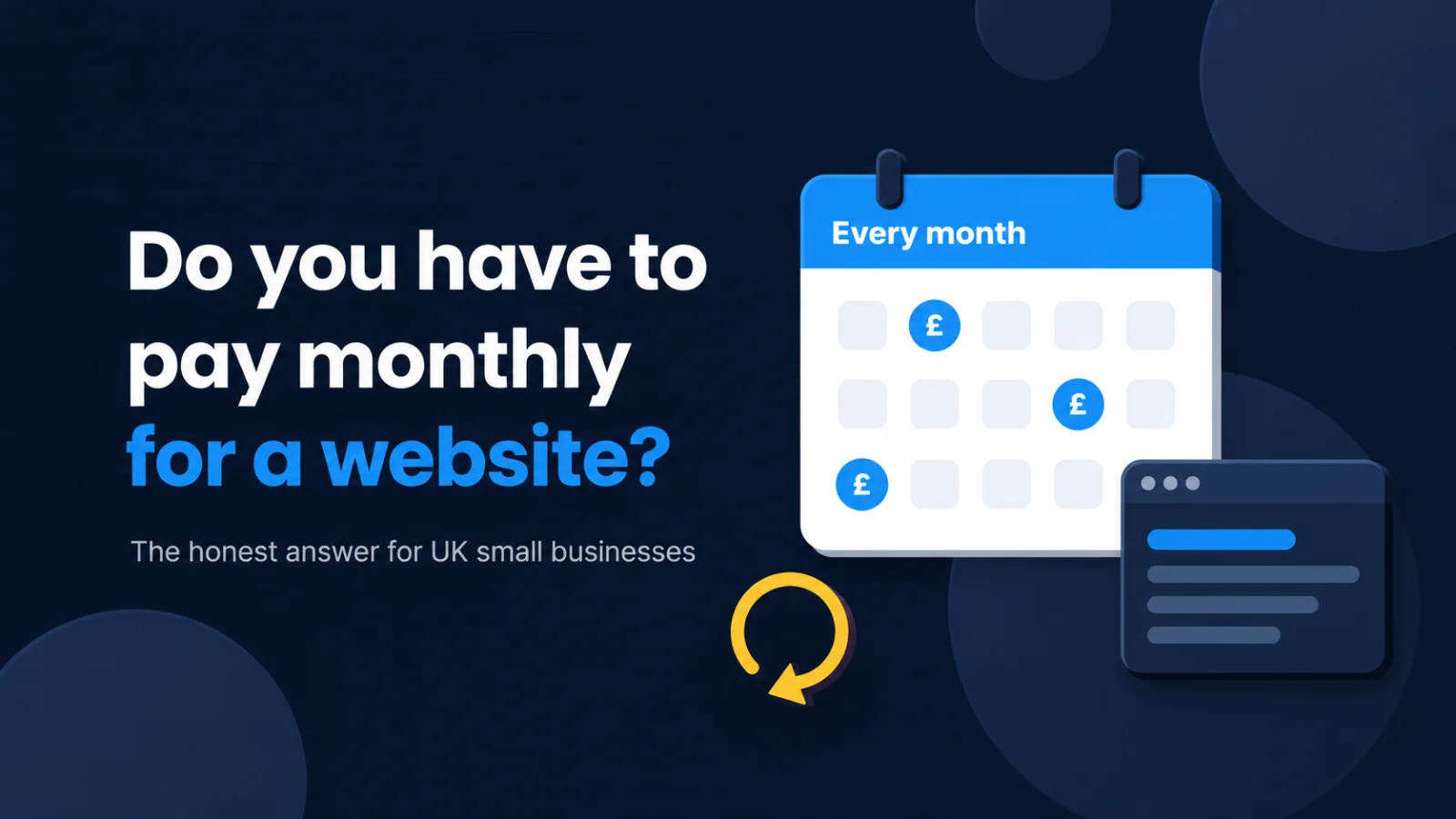
Website rental (sometimes called "website as a subscription") flips the model: instead of buying a website and then paying separately to keep it alive, you pay one monthly fee that covers everything — design, copywriting, hosting, security, email and ongoing support. There's nothing to build, nothing to update and nobody to chase.
It's the same logic as leasing a van rather than buying one: predictable cost, no surprise repair bills, and it's always in working order. For most small businesses, the total three-year cost works out similar to a mid-range freelancer build — but with the maintenance, updates and support already included.
The hidden costs nobody puts in the quote
Whichever route you choose, watch for the extras that quietly stack up: hosting (£5–£30 a month), domain renewal (£10–£20 a year), SSL certificates, email accounts, plugin licences, security patches, and the cost of fixing things when they break. With upfront builds, these land on you. With rental, they should be included — check before you sign.
So which is right for you?
If you have time and enjoy tinkering, DIY is fine. If you have a few thousand pounds spare and specific requirements, a freelancer or agency will serve you well. But if you want a professional website that just works — live within a week, written for you, looked after forever, for one predictable monthly fee — renting is worth a serious look.
That's exactly what we do. Every plan includes design, copywriting, hosting, email and UK support, and most sites are live within a week. See our plans and pricing — or get in touch and tell us about your business.
Want results like this for your business?
Tell us what you need — we will get back to you within a day.