What Do You Need to Provide for a New Business Website?
You do not need to arrive with finished copy, perfect photographs or technical knowledge. Here is what is genuinely useful when starting a new business website — and what Siverno can handle for you.
You do not need to have everything ready
Many business owners delay getting a new website because they think they must prepare every page, write polished copy and understand technical terminology before speaking to a web designer. In reality, a good website process should help you organise the information rather than expect you to arrive with a finished plan.
For a straightforward small-business website, the most valuable starting point is a clear conversation about the business: what you do, who you help and what you want visitors to do next. The remaining details can be shaped during the project.
1. A simple explanation of your business
Start with the basics. Explain what your business does in the same language you would use when speaking to a new customer. You do not need a formal company profile or marketing document.
Useful information includes how long you have been operating, where you are based, the areas you serve and what makes your approach different. These details help the website sound genuine rather than generic.
2. Your main services or products
List the services or products that matter most. They do not need to be written as finished website pages. A few notes, an old brochure, a price list or even links to examples from your industry can provide a useful starting point.
It also helps to identify which service you most want to promote. A website should guide visitors towards your most valuable or most frequently requested work rather than treating every offering as equally important.
3. The customers you want to attract
A website becomes much clearer when it is written for a specific audience. Describe your typical customer and the problem they are trying to solve.
For example, a decorator serving homeowners needs a different tone from a consultant selling to established companies. Knowing the audience affects the wording, structure, imagery and calls to action throughout the site.
4. Your contact and business details
Your website provider will normally need your preferred telephone number, business email address, service area and opening hours. If customers visit your premises, provide the correct address and any useful arrival information.
You may also need to confirm your registered business name, company number and VAT number where relevant, particularly for the footer, invoices or legal pages.
5. Your logo, colours and existing brand materials
If you already have a logo, supply the highest-quality original file available. Vector files such as SVG, EPS or PDF are ideal, although a good-quality PNG can also be useful.
Share any existing brand colours, fonts, brochures, signs, vehicle graphics or social media profiles. These help create a consistent result. If the branding is incomplete, the website can still begin with a clean visual direction rather than waiting for a large branding project.
6. Photographs of your work, team or premises
Original photographs can make a small-business website feel far more trustworthy. Useful images include completed projects, the team at work, the premises, products and before-and-after examples.
Do not worry if the photographs are not professionally edited. A website provider can select, crop and optimise the strongest images. Where suitable original photography is unavailable, carefully chosen licensed imagery can fill the gaps.
7. Reviews and evidence that customers trust you
Provide genuine testimonials, review links, accreditations, awards, memberships or examples of recognised clients where you have permission to display them.
People rarely choose a supplier based on claims alone. Proof helps visitors feel that the business is established and dependable. Even a small number of specific, authentic reviews can be more persuasive than a long list of vague statements.
8. Examples of websites you like — and dislike
You do not need to design the website yourself, but examples are useful for understanding your preferences. Share two or three sites and explain what appeals to you: perhaps the clarity, colours, photography or overall atmosphere.
Examples of styles you dislike can be equally helpful. The aim is not to copy another business, but to reduce guesswork and establish a direction quickly.
9. The action you want visitors to take
Decide what a successful visit should lead to. Should customers telephone, request a quotation, book an appointment, send a message or visit a location?
This decision shapes the entire website. A clear primary action makes the site easier to use and helps prevent visitors from reaching the bottom of a page without knowing what to do next.
What you should not be expected to provide
You should not need to understand hosting, security certificates, mobile breakpoints, software updates or technical SEO. Those are delivery responsibilities, not homework for the customer.
You also should not be forced to write every sentence if copywriting is included in the service. Your knowledge of the business is essential, but a professional provider should turn that knowledge into clear, customer-focused website content.
A useful five-minute starting checklist
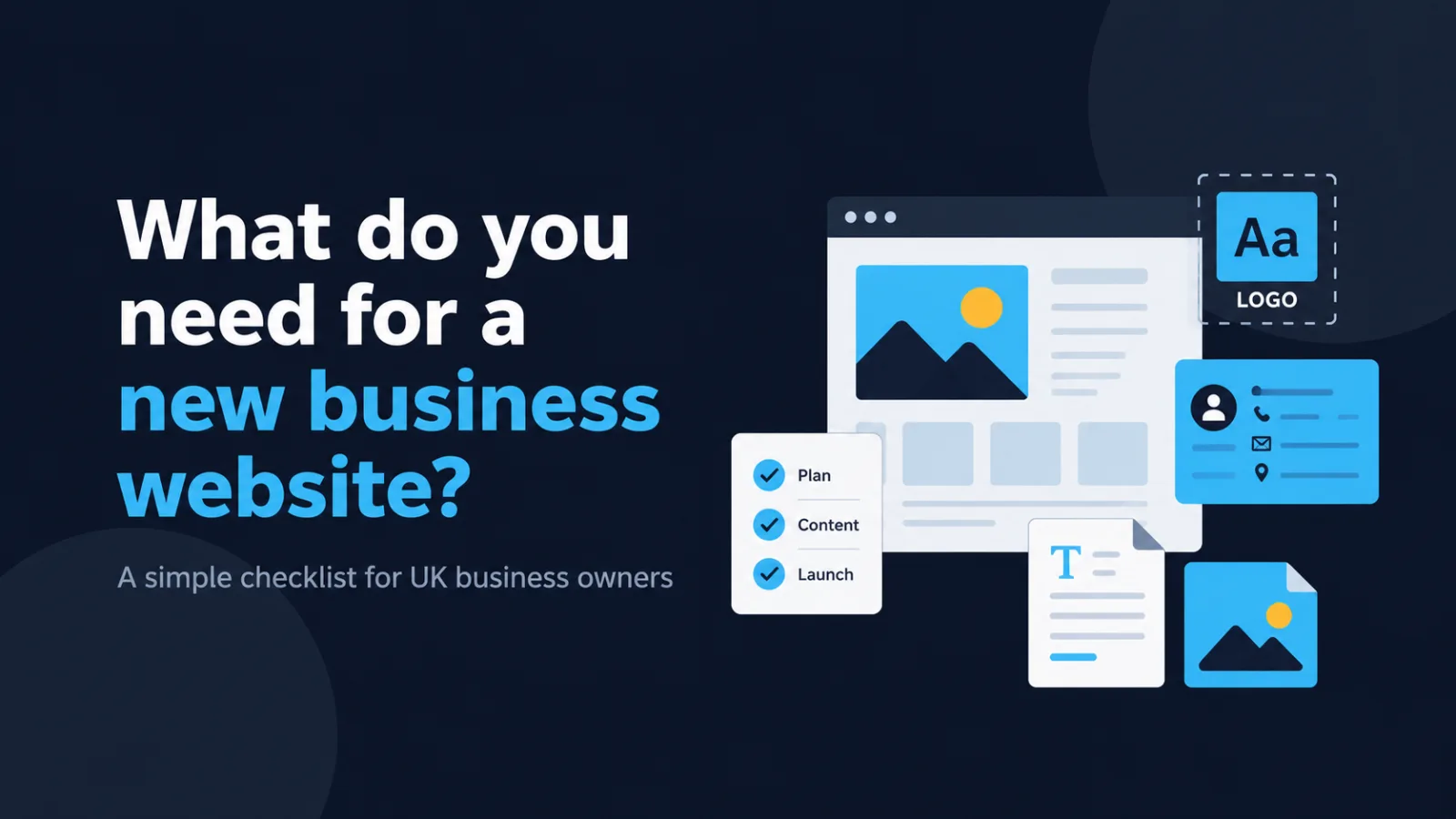
Before the first conversation, gather your business name, contact details, service list, service area, logo, available photographs, review links and two or three websites you like. Then write a few sentences explaining who your best customer is and what you want them to do after visiting the site.
That is enough to begin. Missing details can be collected and refined as the website takes shape.
A managed process should make the project easier
Creating a website should not become another full-time job for the business owner. The right provider will ask focused questions, organise the information and explain decisions in plain English.
At Siverno, you tell us about your business and send whatever useful material you already have. We handle the structure, copywriting, design, hosting, technical setup and ongoing maintenance, then ask you to review and approve the result.
Want results like this for your business?
Tell us what you need — we will get back to you within a day.